



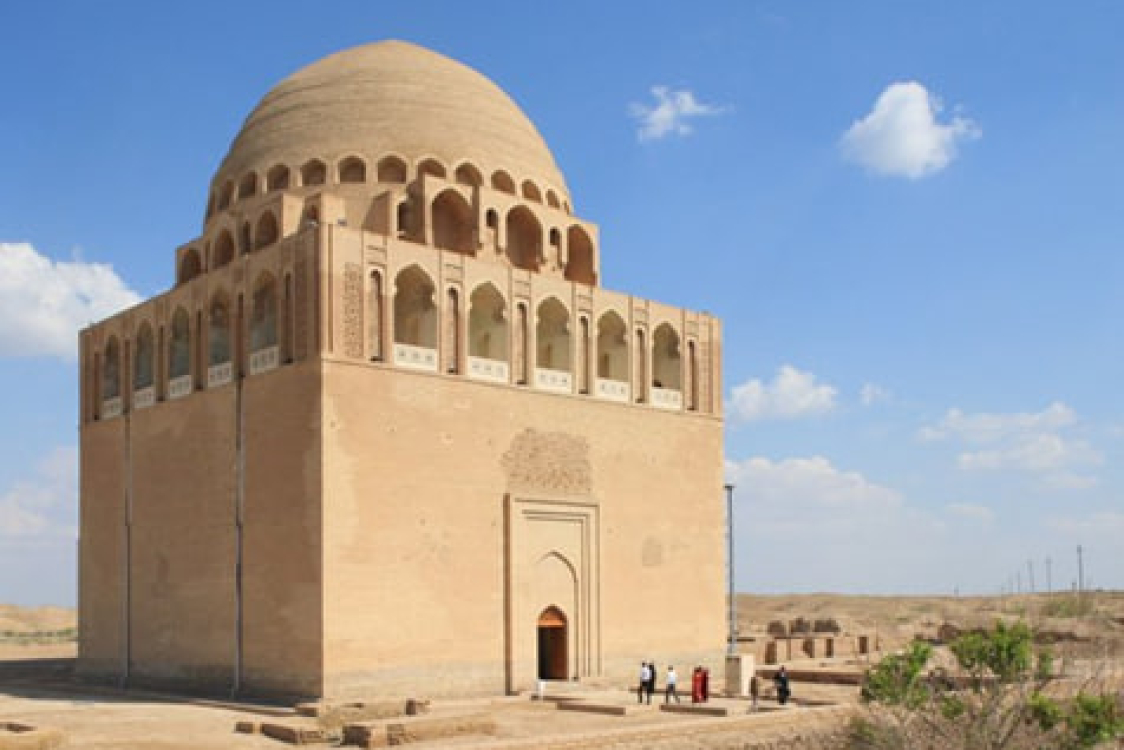
In the run-up to the 35th anniversary of Turkmenistan’s independence, the country is taking stock of its efforts to preserve its historical and cultural heritage and develop its culture. State policy combines ancestral traditions with modern technologies, reports AsmanNews, citing the newspaper ‘Neutral Turkmenistan’.
One of the main tools for the protection of monuments is the State Register of National Historical and Cultural Heritage Sites. Its data is integrated into land registries, which allows archaeological sites to be taken into account in urban planning.
As part of the ‘State Programme for 2022–2028’, research is being carried out at historical heritage sites, including the UNESCO World Heritage Sites of Ancient Merv, Nisa and Kunya-Urgench, as well as the ‘käriz’ (qanat) at the Paryz-Depe settlement. Ground-penetrating radar, digital technologies and 3D modelling are being used in the study of Bronze Age settlement sites — Gonurdepe, Altyndepe and Namazgadepe.
The work by the President of Turkmenistan, Serdar Berdimuhamedov, entitled ‘Anau – Culture Originated from the Millennia’, remains a key scholarly source on the country’s ancient history. The book presents research on Turkmenistan’s role in the development of ancient civilisations and the Great Silk Road.
International scientific cooperation constitutes a separate area of focus. One example of this was the exhibition ‘Ancient Civilisations of Turkmenistan’ at the Capitoline Museums in Rome, which showcased artefacts from Margiana and Parthia.
Read also





Advertising




 Read us in Zen


