

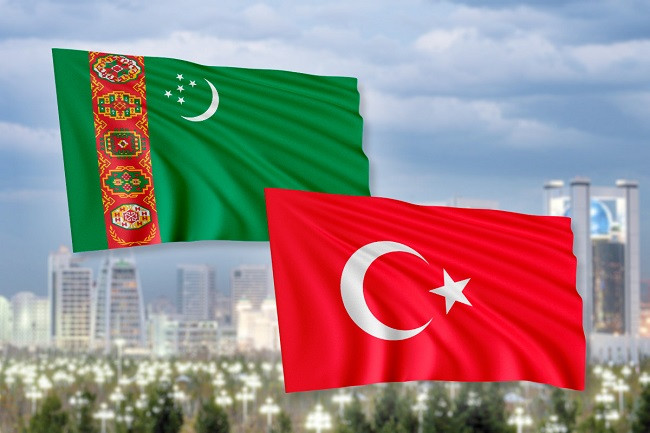
Turkmenistan and Turkey are consistently developing their political, trade and economic, and cultural and humanitarian ties, building on the historical closeness of the two nations and their long-standing experience of inter-state cooperation. High-level contacts, cooperation with the Turkish business community and the coordination of positions on pressing issues on the international agenda play an important role in this process.
Further confirmation of the momentum in bilateral relations came with the working visit of the National Leader of the Turkmen people and Chairman of the Halk Maslahaty of Turkmenistan, Gurbanguly Berdimuhamedov, to the Republic of Turkey on 10–11 November 2026.
One of the key events of the visit was the meeting between Gurbanguly Berdimuhamedov and the President of Turkey, Recep Tayyip Erdogan. The negotiations reaffirmed both sides’ interest in further strengthening inter-state cooperation, based on the historical, linguistic and cultural ties between the two nations.
During the meeting, particular attention was paid to political and diplomatic contacts, trade and economic ties, and cultural and humanitarian cooperation. It was noted that the principle of ‘One Nation – Two States’ continues to form the basis of the Turkmen-Turkish partnership, including within the framework of bilateral and multilateral formats.
The role of mutual visits and high-level negotiations was highlighted separately. In this context, the current meeting served as a continuation of recent contacts between the leadership of the two countries, including the visit by the President of Turkmenistan, Serdar Berdimuhamedov, to Ankara to take part in the Summit of the Organisation of Turkic States.
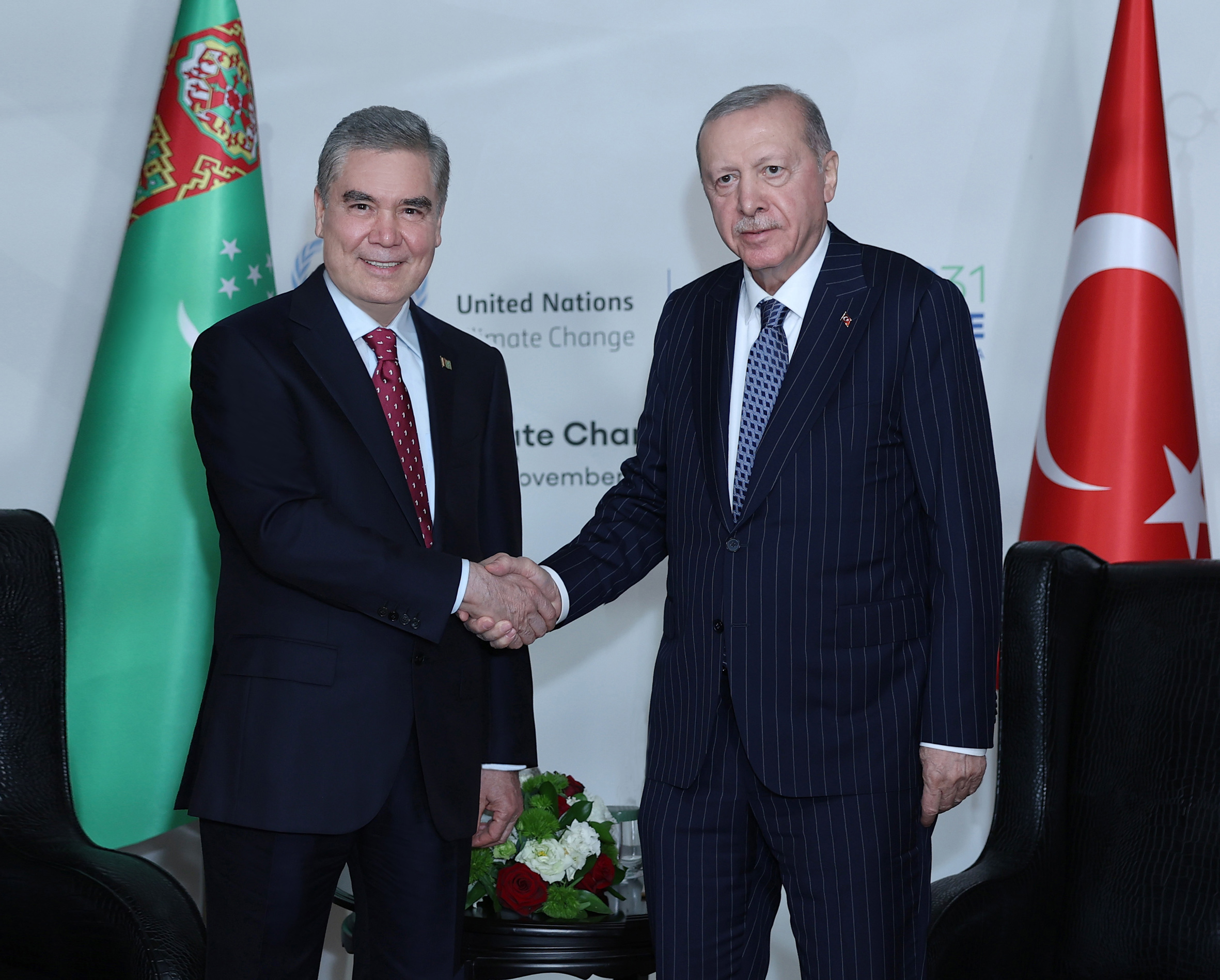
The international agenda was a key focus of the negotiations. Gurbanguly Berdimuhamedov thanked the Turkish side for its support for Turkmenistan’s neutral foreign policy and for the initiatives put forward within the framework of the UN and other international organisations. The parties also noted their shared approaches to issues concerning the strengthening of international peace, security and sustainable development.
The economic dimension of the dialogue occupies a special place in bilateral relations. Turkey is one of Turkmenistan’s leading trade and economic partners. Since independence, projects have been implemented in the country with the participation of Turkish companies in the textile industry, the energy sector, the gas-chemical complex, construction and other sectors. The continuation of such cooperation forms the basis for expanding investment and production ties.
Turkish business and industrial development in Turkmenistan
The practical dimension of the economic partnership was further developed during Gurbanguly Berdimuhamedov’s meetings with the heads of two major Turkish companies — ‘Çalık Holding’ and ‘Rönesans Holding’.
During the meeting with Ahmet Chalik, Chairman of the Board of Directors of ‘Çalık Holding’, opportunities for cooperation in the energy sector, the textile industry and construction were discussed. Particular attention was paid to ‘Turkmenistan’s National Industrial Development Strategy for 2030–2045’.
Gurbanguly Berdimuhamedov noted the potential of Turkish companies to help achieve the strategy’s objectives, including the development of production capacity, the modernisation of enterprises and the implementation of infrastructure projects.
Ahmet Chalik confirmed ‘Çalık Holding’s interest in continuing its operations in Turkmenistan and its readiness to meet deadlines and quality requirements when fulfilling its commitments.
Equally significant was the meeting with Erman Ilicak, Chairman of the Board of ‘Rönesans Holding’. The focus was on the prospects for further cooperation in urban development, the oil and gas sector and the chemical industry.
The company’s long-standing presence in Turkmenistan reflects the role of Turkish business in the implementation of major economic and infrastructure projects. Against the backdrop of efforts to diversify the national economy, develop industry and modernise infrastructure, the accumulated experience of international contractors may prove of practical significance for the implementation of long-term programmes.
Erman Ilicak confirmed ‘Rönesans Holding’s interest in expanding cooperation with Turkmenistan and its readiness to utilise its existing experience and resources for this purpose.
Overall, the meetings with the heads of the two holding companies demonstrated that the economic agenda of Turkmen-Turkish relations extends beyond traditional trade cooperation. One promising area is the participation of Turkish businesses in the implementation of Turkmenistan’s long-term industrial development programmes. At the same time, the timely fulfilment of obligations, the quality of work and the alignment of projects with national economic priorities remain key conditions for further cooperation.
COP31: climate diplomacy and Turkmenistan’s regional initiatives
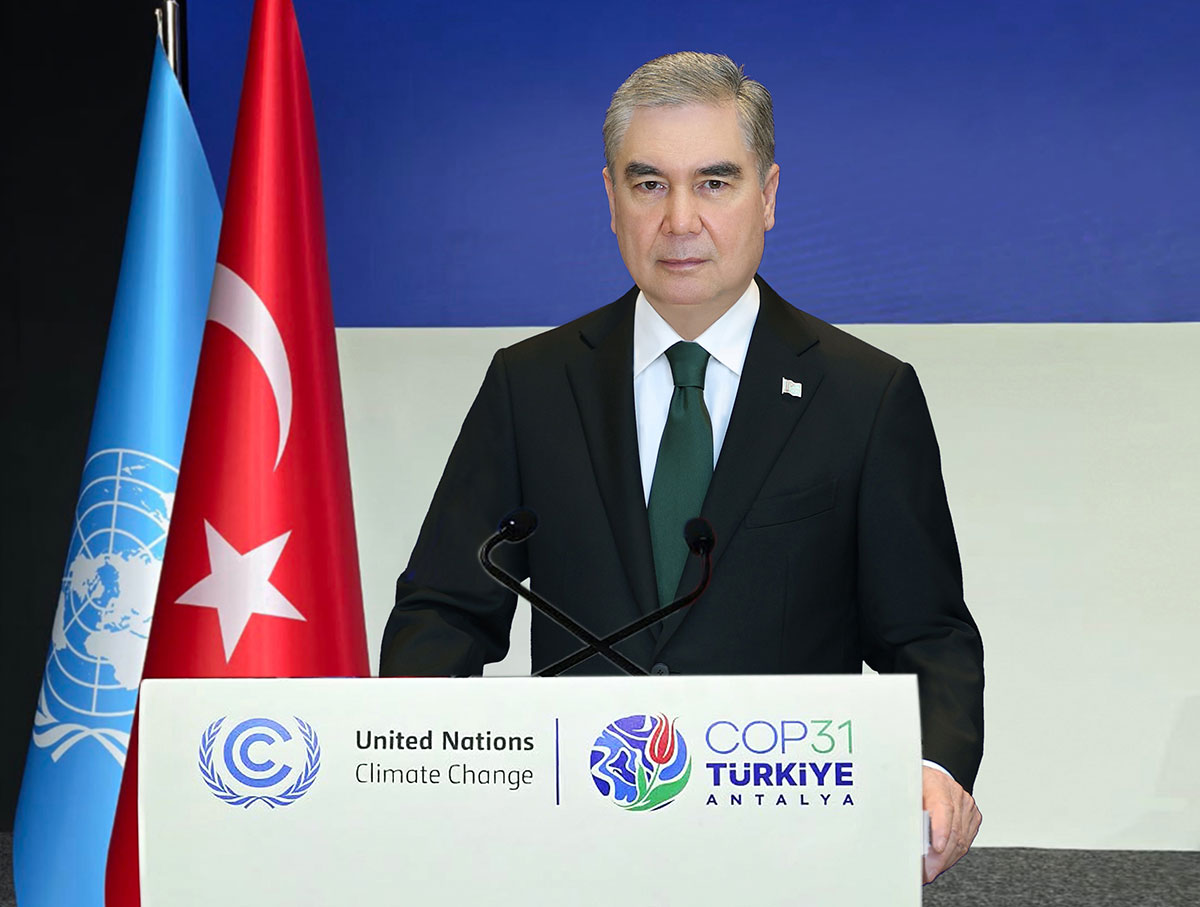
Another important aspect of the visit was Gurbanguly Berdimuhamedov’s participation in the Leaders’ Summit of the 31st Conference of the Parties to the United Nations Framework Convention on Climate Change, held in Antalya.
The forum brought together Heads of State and government, ministers, representatives of international organisations, the expert community, the business sector and civil society from around 200 countries. Discussions centred on issues such as reducing greenhouse gas emissions, the transition to clean energy sources, food security, sustainable urban development and the implementation of circular economy principles.
Gurbanguly Berdimuhamedov’s address at the plenary session of the Leaders’ Summit focused not only on national measures to combat climate change, but also on the development of international cooperation mechanisms.
The Turkmen side reaffirmed its commitment to the obligations under the UN Framework Convention on Climate Change and the Paris Agreement. Among the areas highlighted were the reduction of greenhouse gas emissions, improving energy efficiency, the introduction of environmentally friendly technologies, and the fulfilment of the Global Methane Pledge.
Particular attention was paid to reducing natural gas losses, modernising the national energy supply system and improving the monitoring of methane emissions. For Turkmenistan, which possesses significant hydrocarbon reserves, these issues are of not only environmental but also economic importance. Improving the efficiency of natural gas use and reducing losses are directly linked to the modernisation of energy infrastructure.
A separate section of the speech concerned regional cooperation in Central Asia. In particular, Turkmenistan’s initiative to establish a Regional Centre for Climate Change Technologies in Central Asia was highlighted. The centre is expected to commence operations in early 2027 in collaboration with the UN and other international organisations.
Desertification was identified as another pressing issue for the region. In this regard, Turkmenistan put forward an initiative to establish a Regional Centre for Combating Desertification for the countries of Central Asia. The implementation of such a project involves coordinating the efforts of the region’s states and cooperating with specialised UN agencies.
A significant part of the speech was devoted to initiatives aimed at expanding international cooperation in the field of climate resilience.
The Awaza Programme of Action for 2024–2034 plays a key role in this context; it was officially launched in August 2025 during the Third UN Conference on Landlocked Developing Countries. Turkmenistan, which chairs the Group of Landlocked Developing Countries, highlighted the need for the effective implementation of the programme’s climate component.
COP31 also included a thematic session entitled ‘From Awaza to Antalya: Advancing Climate Action and Implementation of the Awaza Programme of Action by LLDCs’.
At the Leaders’ Summit, Gurbanguly Berdimuhamedov presented a number of new proposals from Turkmenistan.
In particular, it was proposed to consider the possibility of the UN declaring 2028–2037 the ‘Decade of Climate Resilience and Adaptation’. The initiative aims to concentrate international efforts and resources on enhancing states’ resilience to the effects of climate change.
Another proposal was the establishment of the Ashgabat Climate Dialogue — an open international platform for cooperation on the climate agenda. It was proposed that the first international meeting under this format be held in Ashgabat in 2027.
In addition, Turkmenistan has put forward an initiative to develop, in collaboration with international organisations, a Digital Atlas of Climate Change and its Adverse Effects. It is envisaged that such a tool will enable the systematisation of information, the monitoring of climate processes and the identification of the most effective adaptation measures.
Other proposals include the establishment of a global partnership for the provision of climate technologies, expanding developing countries’ access to environmental innovations and climate finance, and the development of an International Environmental Code under the auspices of the UN.
Taken together, these initiatives demonstrate that Turkmenistan views climate issues not only through the prism of national commitments, but also in the context of establishing regional and global cooperation mechanisms.
Practical outcomes and future prospects
An important addition to Turkmenistan’s participation in COP31 was the signing of a number of documents with international organisations. In particular, these include the Declaration on Children, Youth and Climate Action with UNICEF, documents with the United Nations Industrial Development Organisation and the United Nations Development Programme, the Country Framework Programme for Turkmenistan for 2026–2030 with the FAO, as well as a memorandum of cooperation in the field of water resources management.
Turkmenistan’s national pavilion, presented at the conference, also served as a platform for introducing international participants to the country’s initiatives in the fields of environmental protection, resource conservation, methane emission reduction and the development of a ‘green’ economy.
Thus, Gurbanguly Berdimuhamedov’s working visit to Turkey brought together several strands of Turkmenistan’s foreign policy and economic activities. Negotiations with President Recep Tayyip Erdogan confirmed the continuation of political dialogue; meetings with the heads of ‘Çalık Holding’ and ‘Rönesans Holding’ outlined the prospects for Turkish business participation in the country’s industrial development; and participation in COP31 provided an opportunity to present new initiatives in the field of climate diplomacy.
Read also


Advertising


 Read us in Zen


