



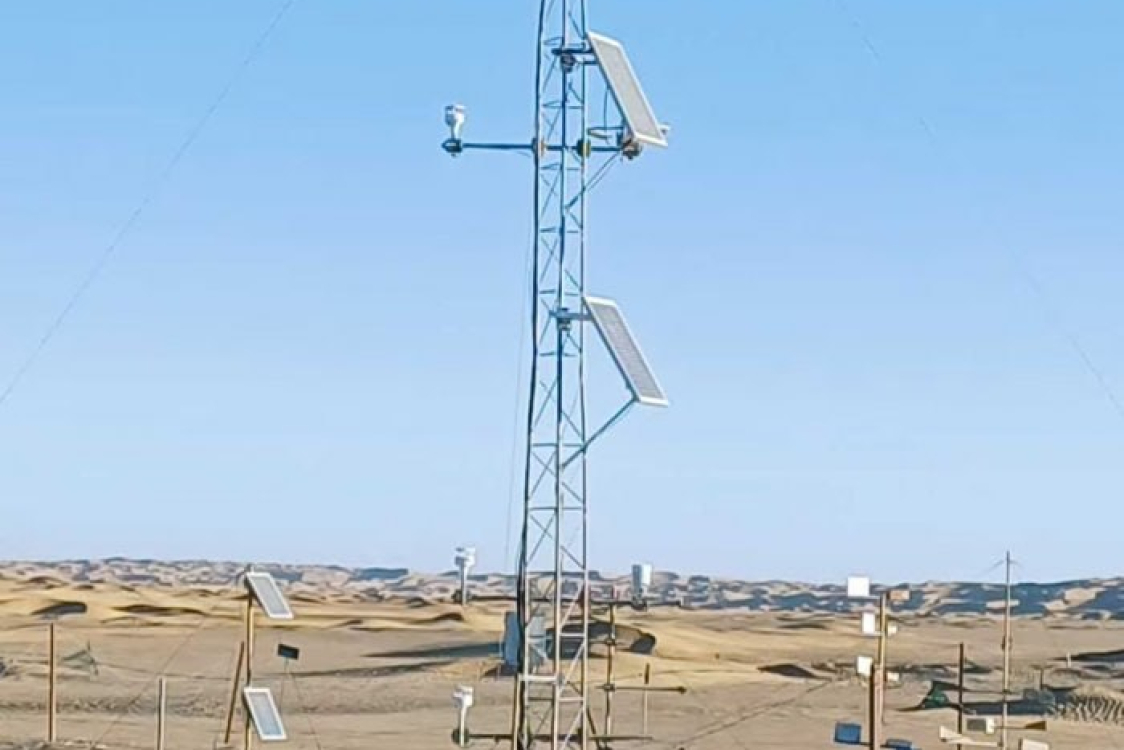
Turkmen and Chinese scientists have strengthened cooperation in the study of desert areas as part of the ‘Belt and Road Initiative’. This was reported by the online publication ‘Business Turkmenistan’.
The National Institute of Deserts, Flora and Fauna of Turkmenistan and the Xinjiang Institute of Ecology and Geography of the Chinese Academy of Sciences are focusing on China's experience in protecting transport infrastructure in extreme climatic conditions.
Particular attention is paid to the motorway through the Taklamakan Desert, which is over 560 km long and protected by an artificial forest belt covering an area of over 3,000 hectares. The ecosystem of 20 million drought-resistant plants prevents sand drift and is supported by electrified wells with mineralised water.
The project is recognised by the international community and contributes to the restoration of biodiversity and the application of technologies for growing cistanche on saxaul.
The similarity of desert conditions with the Karakum Desert makes the exchange of experience particularly useful for Turkmenistan, which sees cooperation as a contribution to the development of sustainable ecosystems and the creation of a UN Regional Centre for Climate Technology in Ashgabat.
Read also



Advertising




 Read us in Zen


