

Football in Turkmenistan represents not only a popular sport but also a significant socio-cultural phenomenon that reflects the processes of institutional state-building, international integration, and the strategic development of the humanitarian sphere. The history of national football is closely linked to the historical transformations of the 20th and 21st centuries — from the Soviet sports legacy to the contemporary model of independent sports policy.
The establishment of football traditions in the territory of present-day Turkmenistan began in the 1920s. By 1927, the Ashgabat team was formed and played an international match against a team from Mashhad, demonstrating the early inclusion of the region in cross-border sports contacts. In 1928, the Turkmenistan national team participated in the All-Union Spartakiad in Moscow, achieving commendable results in competitions with teams from other Soviet regions. During the 1930s, football actively developed within the framework of the Soviet physical culture system.
A particularly important role during this period was played by the Ashgabat club ‘Kolhozchy’, later known as ‘Kopetdag’, which represented the Turkmen SSR in Soviet championships. The team’s performances in the second league of the USSR Championship from the 1960s to the 1980s contributed to the development of professional personnel, a coaching school, and a stable sports infrastructure. By the time of independence in 1991, the country already possessed a well-developed foundation for the further autonomous advancement of football.
Following the proclamation of Turkmenistan’s independence, the formation of a national football structure began. In 1992, the Football Federation of Turkmenistan (FFT) was established, tasked with managing national competitions, developing club football, and preparing national teams. In 1993, the Federation joined the subregional organization CAFA, and in 1994, it became a full member of FIFA and the Asian Football Confederation (AFC), officially integrating Turkmenistan into the international football community.
Based on the FFT, regular competitions were systematized, forming the foundation of club football in the country. In 1992, the first season of the Ýokary Liga (Top League) was launched, including the leading clubs of the country, providing regular match practice and fostering a sustainable competitive environment. In 1993, the Turkmenistan Cup was established, creating additional opportunities for players to demonstrate their skills and for young talents to emerge. Gradually, regional, youth, and junior championships were introduced, creating a prepared coaching and refereeing infrastructure and ensuring the institutional maturity of national football.
On the international stage, the Turkmenistan national team began competing following the FFT’s registration with FIFA. In 2004, the team participated for the first time in the final stage of the AFC Asian Cup, marking an important milestone in the national team’s history. Participation in international tournaments facilitated the accumulation of experience and the strengthening of the country’s sporting image. At various times, the team demonstrated positive trends in the FIFA rankings, confirming its potential for further growth. In 2025, the U-17 team defeated Afghanistan in the CAFA Championship, demonstrating the strengthening of youth football.
Club football in Turkmenistan, over more than three decades of independence, has undergone stages of consolidation and structural stabilization. In the 1990s, leading positions were held by ‘Kopetdag’ and ‘Nisa’, while in the 2010s, ‘Altyn Asyr’ dominated, winning the national championship eight consecutive times from 2014 to 2021. In 2018, ‘Altyn Asyr’ reached the final of the AFC Cup, marking a significant achievement for Turkmen club football on the international stage.
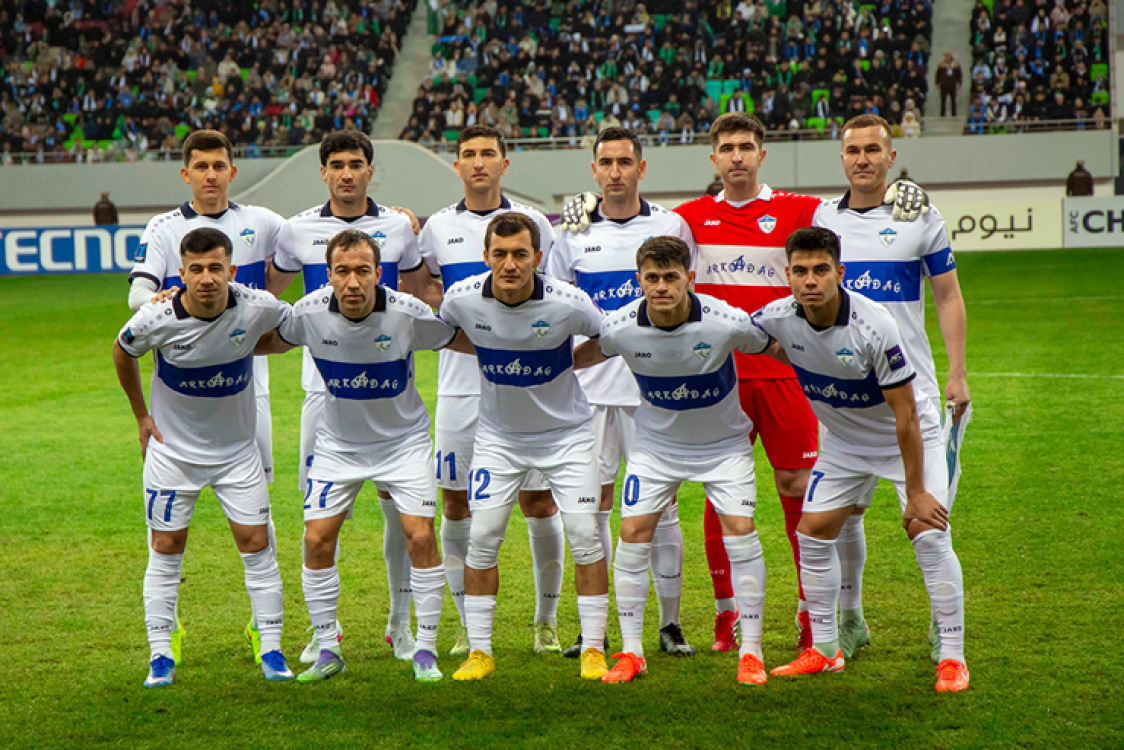
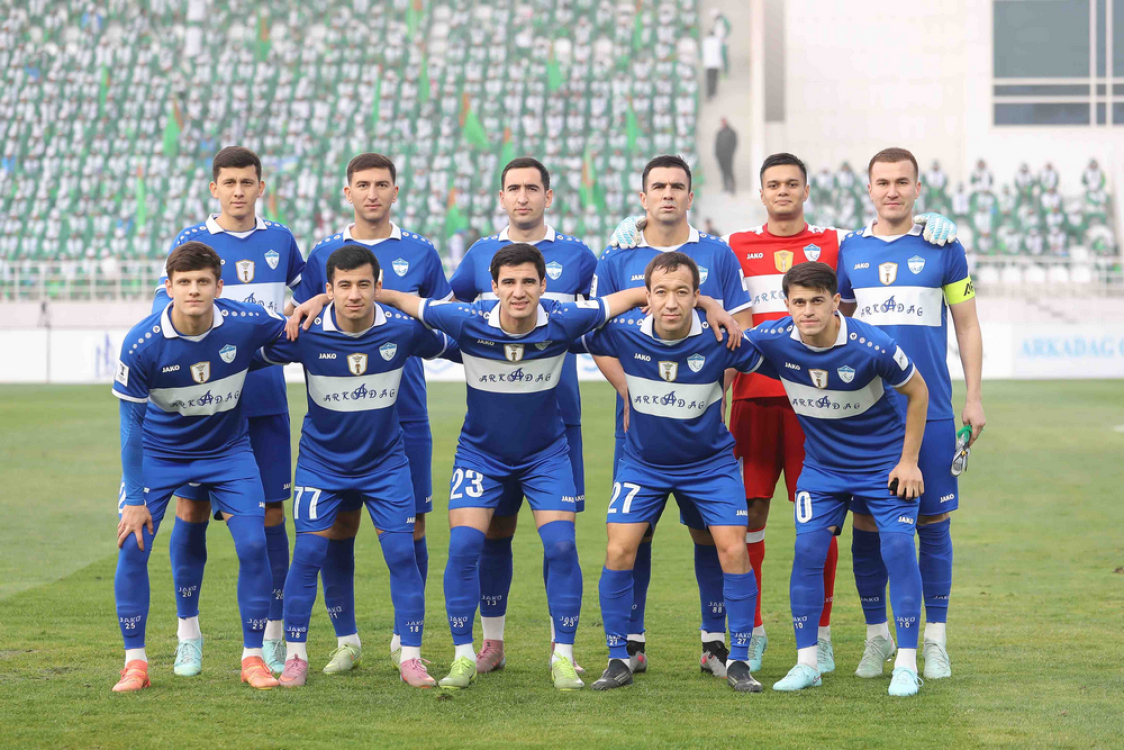
In recent years, noticeable progress has been demonstrated by the clubs ‘Ahal’ and ‘Arkadag’. The football club ‘Arkadag’, founded in 2023, quickly became a symbol of national football development. In its debut season, the team won the Turkmenistan championship, and in 2025, it secured the title for the third consecutive time, completing the season undefeated: 28 matches, 84 points, 105 goals scored, and only 15 conceded. These results reflect the club’s high level of organization and strategic approach to management.
Turkmen clubs actively participate in international AFC tournaments, providing new opportunities to enhance skills and gain international recognition. For example, ‘Altyn Asyr’s achievements in IFFHS rankings highlight the accomplishments of Turkmen football on the global stage.
The President of Turkmenistan, Serdar Berdimuhamedov, and the National Leader of the Turkmen people, Gurbanguly Berdimuhamedov, emphasize the priority of sports and football for national development. State initiatives encompass all aspects of football improvement: youth training, coach and referee education, organization of national leagues and championships, and the integration of Turkmen clubs into Asian and global competitions.
Modern sports infrastructure in Turkmenistan, including the Olympic Stadium in Ashgabat with a capacity of 45,000 spectators, ‘Kopetdag’ Stadium, contemporary sports complexes and training bases, as well as a new modern sports arena in Arkadag city, ensures systematic athlete preparation and the hosting of international competitions, strengthening Turkmenistan’s status as a center for sports tourism and international dialogue.
Football development programs include youth tournaments, international seminars for coaches and referees, and experience exchange with representatives of FIFA and the AFC. Training young players and improving coach qualifications remain priorities: ‘D’ license certification programs enable work with children’s teams, and Turkmen youth national teams actively participate in CAFA regional tournaments.
In 2025, a new head coach, Rovshen Meredov, with a PRO license, was appointed to the national team, reflecting the federation’s commitment to improving team performance internationally. FIFA experts visiting Turkmenistan noted the activity of the Football Federation and the potential for further development, emphasizing the importance of the ‘Football in Schools’ program for promoting the sport among youth.
The key event in the modern history of Turkmen football was the AFC Champions League 2 Round of 16 match between ‘Arkadag’ and the Saudi Arabian club ‘Al-Nassr’, which took place on February 11, 2026, in Ashgabat. Despite the Turkmen team's narrow 0-1 defeat, the match demonstrated the institutional maturity of national football and its readiness to host international competitions. The return match is planned for 18 February 2026 in Riyadh at Al-Awwal Park, where the hosts will have an advantage due to the result of the first encounter. This second match will be significant not only for qualifying to the quarterfinals but also for assessing the competitiveness of the Turkmen club at the international level.
Football in Turkmenistan is not only a sporting competition, but also a significant social institution that contributes to strengthening national unity, educating youth, and the country's international standing.
Read also
Advertising



 Read us in Zen


