



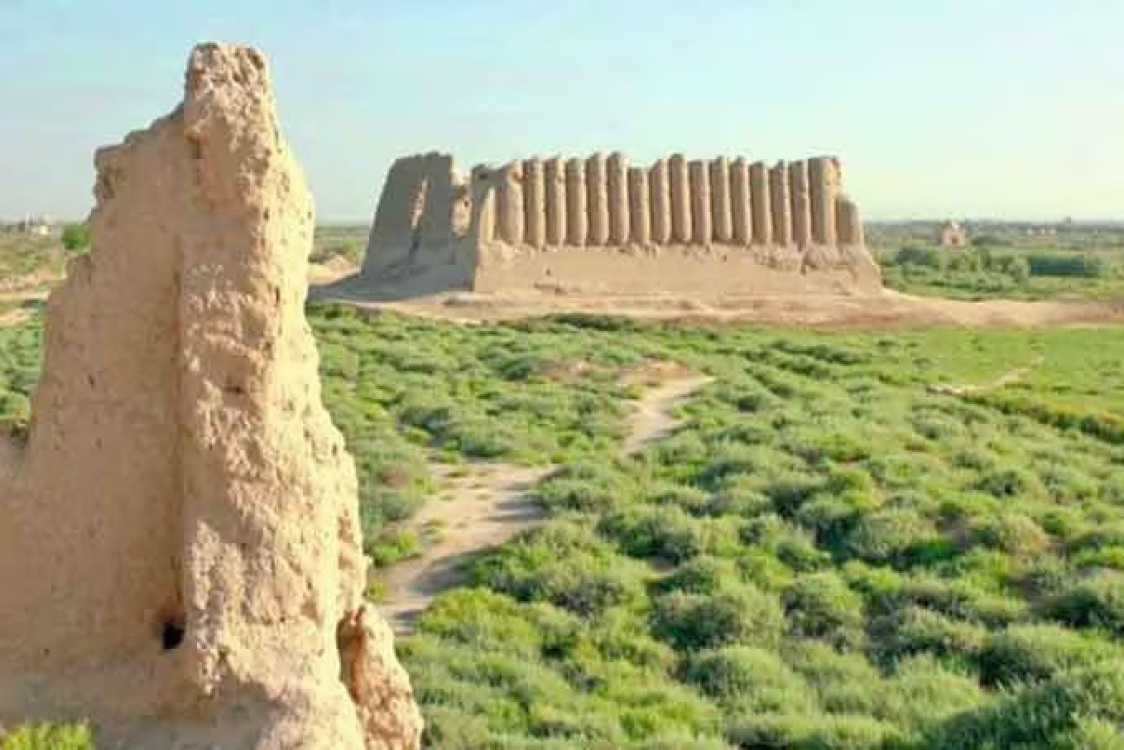
In the early Middle Ages, the Merv oasis, known as the ‘Mother of Cities,’ became the center of a unique architectural style – fortified manor-palaces. These monuments along the Great Silk Road served not only as residences but also as administrative centers and key hubs of trade between the 5th and 9th centuries, according to the IIC.
Particular attention is drawn to the Greater and Lesser Gyzgala – the largest adobe fortresses in the world, distinguished by their semi-circular walls that naturally cooled interior spaces. These two-story structures have preserved their strength for over one and a half millennia due to special additives in the mudbrick. Archaeological findings, including a bronze pendant depicting the goddess Anahita, testify to the high level of culture in the region.
The Durnaly fortress performed both defensive and customs functions, while the discovery of massive ceramic vessels confirms the oasis’s status as a major agricultural exporter. Haram-Koshk, an example of private architecture from the 9th century, with its central domed hall, became a foundation for the classical architecture of Central Asia. Remains of glass vessels for incense, intricate ganch (clay gypsum) carvings, and ostraca bearing inscriptions demonstrate a high level of literacy and a developed accounting system of that time.
This ancient heritage continues to influence the modern architecture of Turkmenistan. Elements of medieval design are reflected in the white-marble city of Ashgabat and the “smart” city of Arkadag, while the monuments of Mary velayat remain symbols of national memory and a source of inspiration.
Read also


Advertising




 Read us in Zen


