



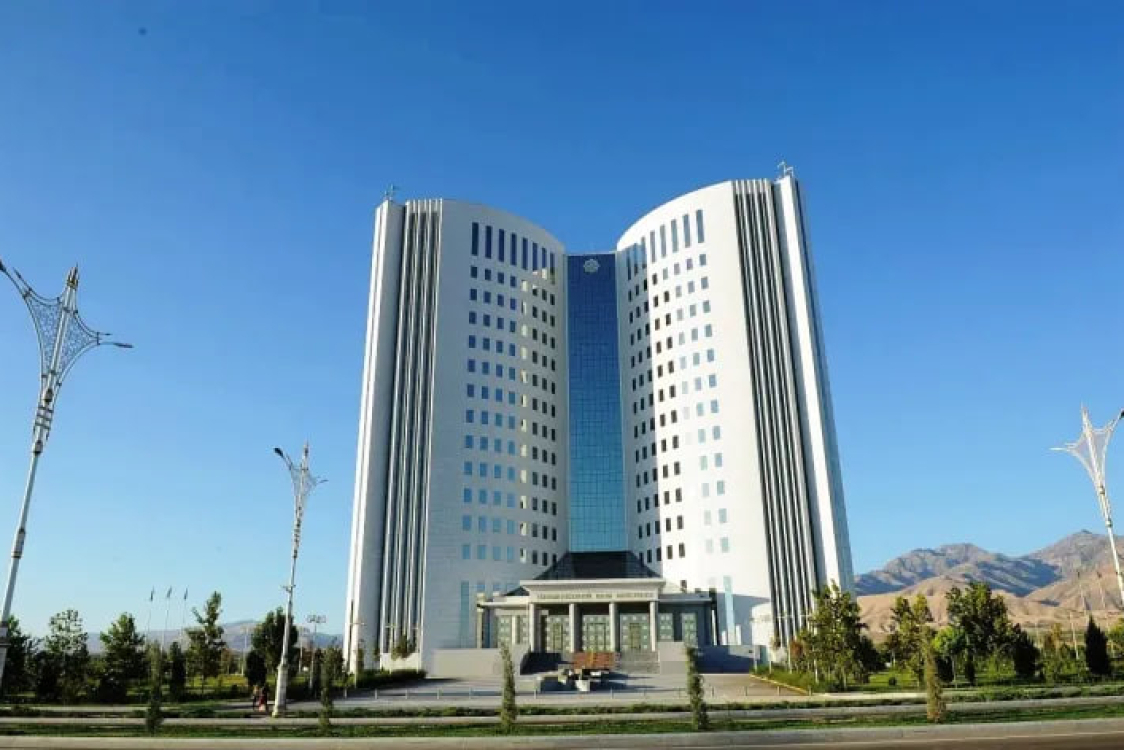
The Ministry of Education of Turkmenistan and higher education institutions have begun implementing the Strategy for the Development of Higher Professional Education in Turkmenistan for 2026–2052. The document was approved by a Resolution of the President of Turkmenistan dated 17 October 2025, together with the Action Plan for 2026–2030, reports the news agency TDH.
The strategy aims to improve the quality of higher education, train specialists in high demand, develop science and innovation, promote digitalisation and expand international cooperation.
As part of its implementation, the regulatory framework is being improved and mechanisms are being established to analyse labour market needs. A methodology for surveying employers and a digital platform for analysing the knowledge and skills required of graduates have been developed. The university ranking system has also been updated, with the results published on the rating.bilim.tm portal.
To identify promising areas for specialist training, the Ministry of Education of Turkmenistan has published the ‘Geljegiň hünärleriniň atlasy’ (‘Atlas of Future Professions’).
Scientific research and innovation are being actively developed at higher education institutions. Since the start of the year, 11 hackathons and three start-up competitions have been held, and 320 national certificates (patents) have been granted.
International cooperation is expanding. Since the start of the year, higher education institutions have organised 23 international events, including 10 academic competitions and 13 scientific and practical conferences. International accreditation of educational programmes, academic exchanges and the professional development of teaching staff also remain priorities.
The strategy provides for the development of inclusive education, the use of digital resources and distance learning. Facilities for people with disabilities are being created in new teaching buildings.
The development of public-private partnerships has become an important focus. The International University of Industrialists and Entrepreneurs, the country’s first non-state higher education institution, trains specialists in the fields of business, industry, digital technologies and innovation.
At the same time, mechanisms for assessing the quality of education are being improved, and programmes are being developed to promote a healthy lifestyle, foster patriotism and support the cultural development of young people.
Read also
Advertising




 Read us in Zen


