


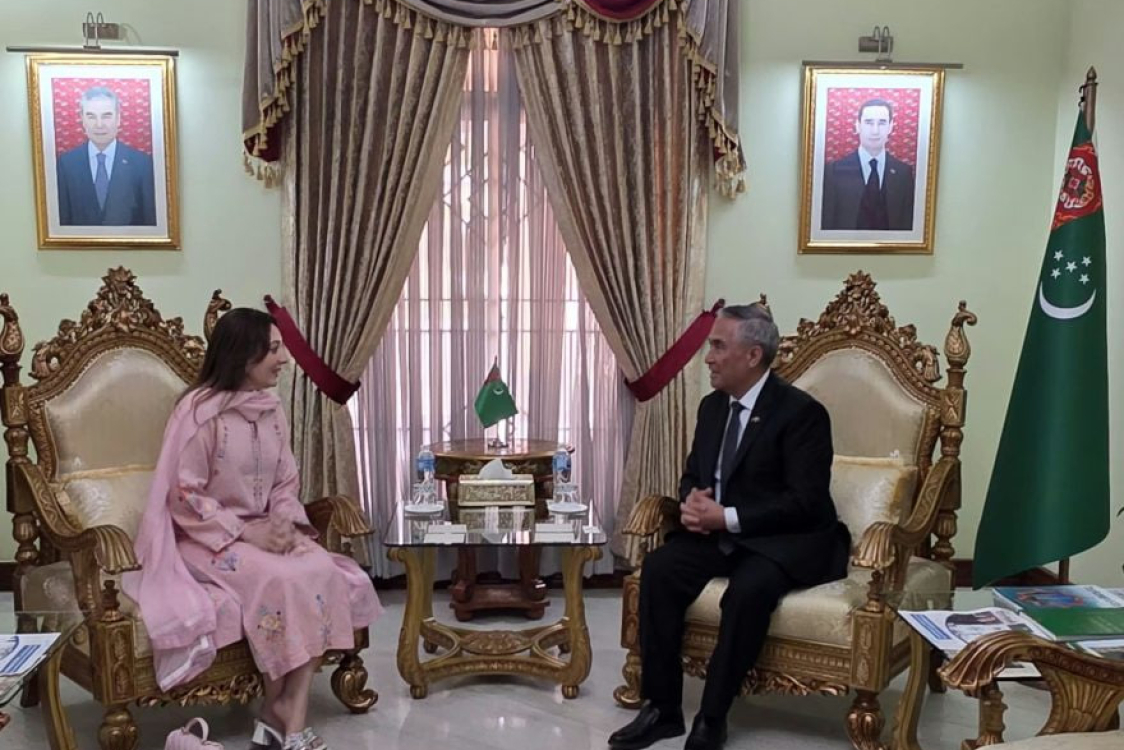
The Natural Gas Research Institute of the State Concern ‘Türkmengaz’ continues to refine technologies for the extraction, transportation and processing of hydrocarbon raw materials. One of the promising areas of work is the expansion of scientific and technical cooperation with the Malaysian company Petronas and its research centres, reports AsmanNews.
The Institute provides scientific support to the fuel and energy sector across all the velayats of the country. Among its main tasks are improving the efficiency of developing new gas and gas condensate fields and optimising the operation of existing fields, including the supergiant ‘Galkynyş’ field.
The Institute’s specialists are also developing modern gas transmission and equipment diagnostic systems, introducing energy-saving technologies, and exploring opportunities for the deep processing of hydrocarbon feedstocks and increasing the production of liquefied and compressed natural gas.
Comprehensive diagnostics enable the timely detection of faults and reduce the risk of accidents at production facilities.
A separate area of research relates to environmental safety. The Institute carries out engineering and environmental surveys, assesses the impact of production facilities on the environment, and organises monitoring of air, water and soil quality. Both fixed and mobile laboratories are used for this purpose.
One of the priorities is reducing methane emissions. This work involves the use of modern monitoring systems and gas capture technologies, which help to minimise losses during extraction and transport. One example of this was the Institute’s participation in a project to reduce the intensity of the flames at the Darwaza gas crater. According to the source material, the technical measures taken helped to reduce the intensity of the flames and the volume of emissions, as confirmed by independent international observations.
The institute views the development of international scientific ties as an opportunity to exchange expertise and introduce cutting-edge technologies. Of particular interest is the collaboration with Petronas, which possesses expertise in the development of offshore fields, oil and gas chemistry, and the production of liquefied natural gas.
Potential areas for joint work include well drilling and operation, geological surveys, the processing of seismic and geophysical data, reserve assessment and field development modelling. An exchange of expertise in the field of laboratory analysis of the composition of gas, condensate and formation water is also being considered, including raw materials with high hydrogen sulphide and carbon dioxide content.
Cooperation may extend to the development of gas chemistry, LNG production technology, the creation of underground gas storage facilities, and the improvement of methods for injecting sour gases and wastewater into reservoirs. Other shared objectives include the digitalisation of the industry, improving energy efficiency and reducing the carbon footprint.
Expanding cooperation with Petronas and other relevant organisations in Malaysia will create further opportunities to strengthen scientific and technical ties, exchange technologies and develop cooperation between the two countries.
Read also



Advertising

 Read us in Zen


