



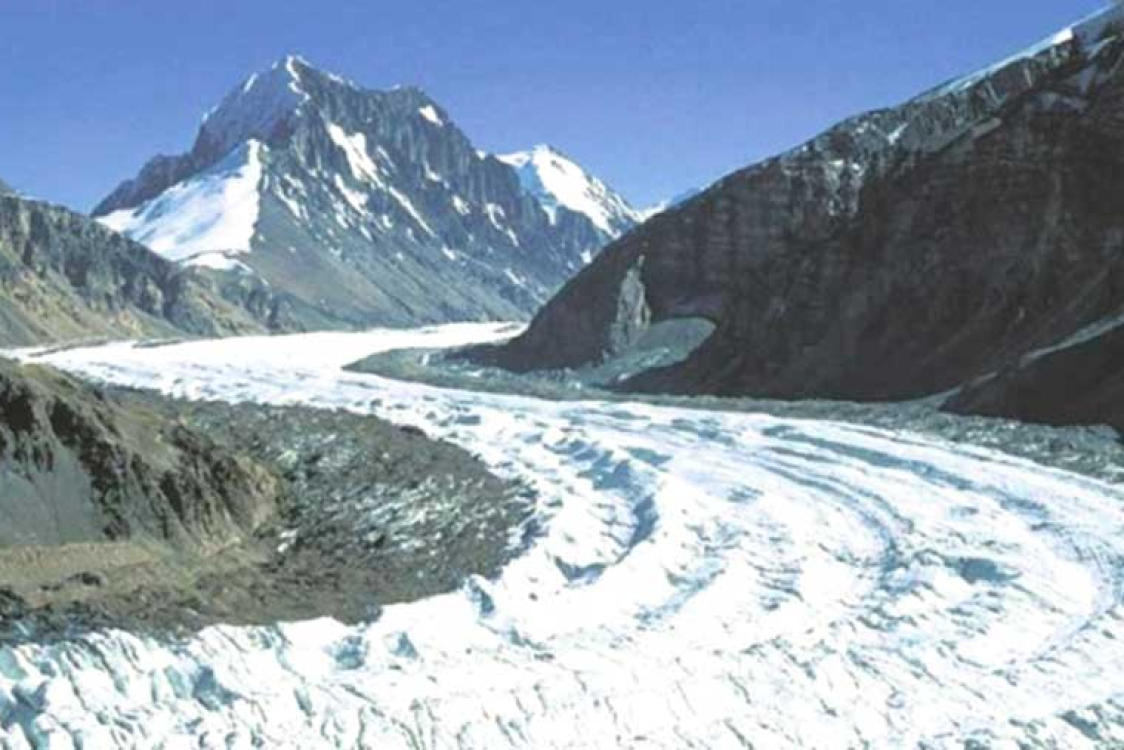
Glaciers and snow cover in Central Asia are shrinking due to global warming. The rise in average annual temperatures is leading to a reduction in snow cover in mountainous areas. This was reported by Turkmenportal with reference to the newspaper ‘Neutral Turkmenistan’.
The state of glacier and snow systems directly affects the water balance of the Amu Darya and Syr Darya basins, transboundary rivers that provide water resources and economic development for millions of residents of five countries in the region.
The Kopetdag and Koytendag mountain ranges are located in Turkmenistan. There are no large glaciers here, but seasonal snow cover plays an important role in shaping the local climate and hydrological regime.
Kopetdag, stretching along the south-western border of the country, is characterised by high biodiversity. It is home to snow leopards, argali and urial. The vegetation cover of the mountains protects the soil from erosion and regulates meltwater runoff.
In Koytendag, seasonal snow cover lasts until May and influences the formation of permanent and temporary watercourses. This region is the only habitat in Turkmenistan for the markhor, a species of goat.
Snow cover is also characteristic of the Greater and Lesser Balkan Mountains, where plant species grow, including those listed in the Red Book of Turkmenistan.
Scientists are recording changes in the timing of snowfall and melting, as well as shifts in the seasons. These processes are reflected in the state of the country's ecosystems and landscapes.
In this regard, Turkmenistan is stepping up its monitoring of snow cover and mountain ecosystems. Research is focused on assessing the consequences of climate change and developing long-term adaptation measures.
Read also


Advertising




 Read us in Zen


