



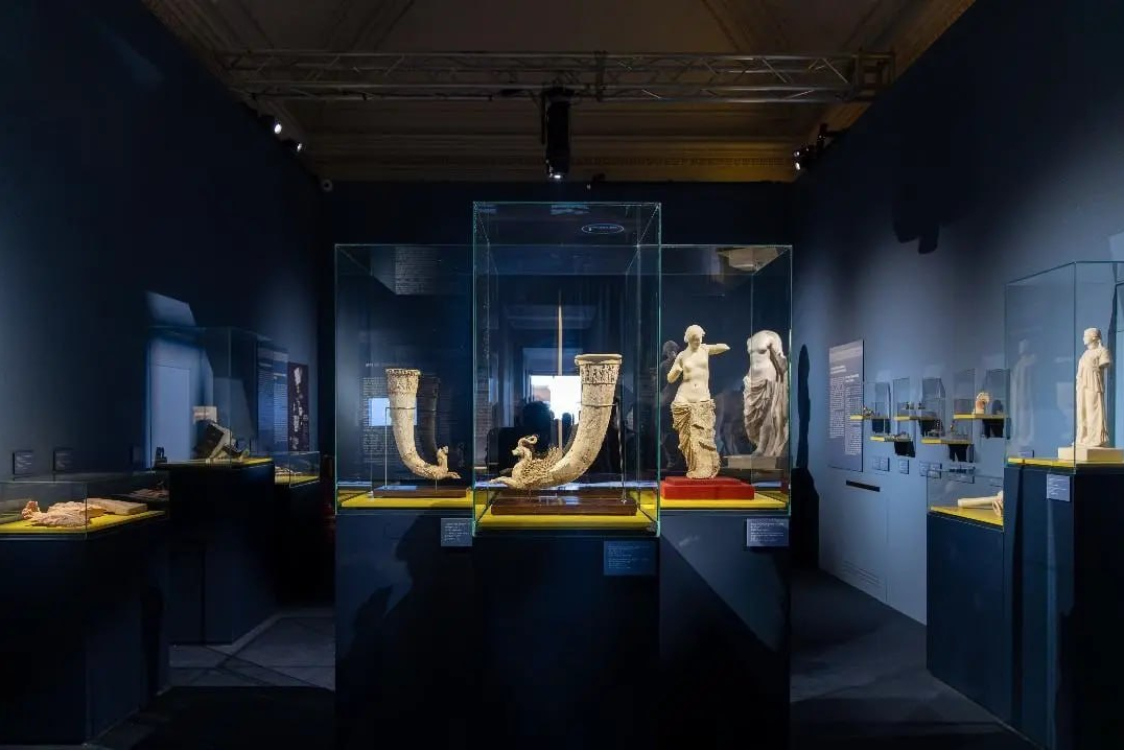
On 12 April, the exhibition ‘Ancient Civilisations of Turkmenistan’ came to a close at the Capitoline Museums in Rome, having spent six months transforming the halls of the Palazzo dei Conservatori into a space for symbolic dialogue between Rome and Parthia. This was reported by the news agency Orient.
The historical rivalry between the two powers gave way to a cultural exchange that aroused considerable interest in the academic and artistic circles of the Italian capital.
The exhibition, organised with the participation of the Ministry of Culture of Turkmenistan and Italian archaeological centres, presented around 150 unique artefacts and served as an important revelation of little-studied pages of Central Asian history for a European audience.
The exhibition spanned the period from prehistoric Margiana to the Parthian era. Among the key exhibits was a composite statue from Gonur-Depe (3rd–2nd millennium BC), bearing witness to early trade links between East and West. Particular attention was drawn to the ivory rhytons from Old Nisa, combining Greek and Eastern motifs, as well as the clay heads, presumably depicting Parthian rulers.
The statue of Aphrodite Anadyomene from Nisa became a symbol of cultural synthesis, reflecting the influence of ancient traditions on the art of Parthia. Visitors also praised the curators’ work, noting the informative nature of the exhibition and its ability to reveal the level of development of ancient societies in the territory of modern-day Turkmenistan.
As the exhibition drew to a close, the focus in the Italian press shifted from sensational announcements to a deeper reflection on its significance. According to experts, the project was a rare cultural event that highlighted Turkmenistan’s contribution to the world’s historical heritage.
Read also
Advertising




 Read us in Zen


